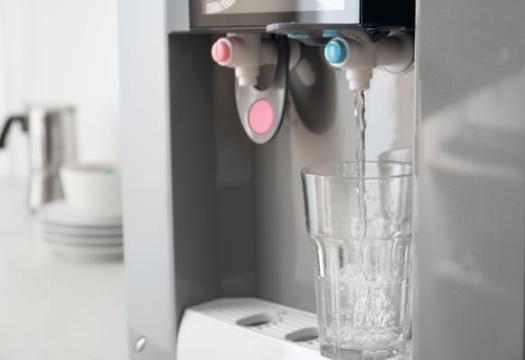
You wouldn’t think that something as seemingly innocuous as a water cooler could get dirty... but it can. Believe it or not, that water dispenser needs to be cleaned and even sanitized on occasion. (After all, microbes love moisture, and there’s plenty of that in your water cooler.)
Find out how to clean a water dispenser — inside and out — and then see what you need to do to sanitize a water cooler.
Note: Always consult the manufacturer’s care instructions before cleaning. Not all water coolers have the exact same anatomy, and you don’t want to break or damage yours.
How to Clean a Water Dispenser
When it comes to figuring out the best way to clean a water cooler, you want to wait until your water jug is empty. Trust us, this will make your life so much easier, as you won’t have to lift heavy bottles of water or worry about liquid sloshing all over the place.
You’ll need:
- A gallon jug or a pitcher
- 1 cup of distilled white vinegar
- 3 cups of hot water
- A bucket
- Mild dishwashing liquid
- A microfiber cloth
- Dishwashing gloves (optional)
Step-by-Step Instructions
-
1Step 1Unplug
Unplug the water cooler and remove the bottle.
-
2Step 2Drain
Using the cold tap, drain the contents of the cooler into your pitcher or jug. This water is still drinkable.
-
3Step 3Remove guard
Remove the water guard from the inside of the cooler if needed. (The water guard is the part that punctures the lids of the water bottles. Not all coolers have one.)
-
4Step 4Remove baffle
Gently remove the baffle, which is a plastic or metal disc.
-
5Step 5Wash
Wash the water guard and/or the baffle using a mixture of mild dishwashing liquid and warm water, just as you would wash dishes by hand.
-
6Step 6Rinse
Rinse the baffle and/or water guard to make sure all the soap is removed, and set them aside on a clean and dry microfiber cloth.
-
7Step 7Mix vinegar and hot water
Mix 1 cup of distilled white vinegar with 3 cups of hot water and pour this into the reservoir of the cooler. (Gloves may come in handy here, especially if you have sensitive skin.)
-
8Step 8Wipe reservoir
Wipe the inside of the reservoir clean using this solution and a microfiber cloth.
-
9Step 9Drain
Drain the cleaning solution from the reservoir into your bucket.
-
10Step 10Rinse
Rinse the reservoir twice by filling it with clean water, which you then drain into the bucket.
-
11Step 11Return baffle and water guard
Return the baffle and the water guard to their place.
-
12Step 12Install new bottle
Install a new bottle in the cooler and plug the power supply back in.
-
13Step 13Clean the outside
The outside of your water dispenser needs love, too! Just think of all the hands that touch it and what might be going on inside those taps. Fortunately, this is a fairly easy task.
Unplug your water cooler.
Remove the taps and tray and wash these in the sink using a mixture of dishwashing liquid and warm water.
Wipe the taps and tray dry with a microfiber cloth.
Spritz the outside of the cooler with the vinegar, including the area where the tray would sit. (Be careful if you have stone floors in your kitchen, as vinegar can damage this material.)
Use the microfiber cloth to wipe away any grime and vinegar residue.
Return the taps and tray to their places.
Plug your water cooler back in.
-
14Step 14Sanitize
Most manufacturers recommend that you sanitize your water cooler anywhere from every three to six months. However, you’ll want to check your care instructions to make sure you don’t need to be undertaking this task more or less often.
In addition, sanitizing a water cooler can be tricky and doing it improperly could result in your water tasting funny or being harmful to your health if sanitizer is left in too long. Many people may sanitize their own water coolers using bleach. Keep in mind that if you cleaned your water cooler with vinegar, this is not a wise move. Bleach and vinegar are two cleaners that should never be mixed, as they create toxic chlorine gas when combined.
Because of this, it’s a good idea to follow the sanitization instructions in your manufacturer’s guide to the letter or ask your water service provider if sanitizing is a something they offer.